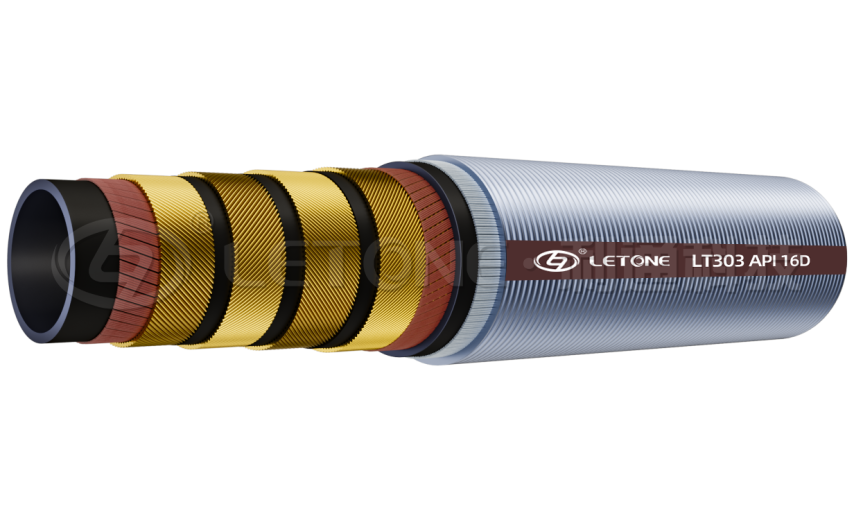
High-Pressure Hoses For The Oil And Gas Industry

  • Product Introduction: Hydraulic hoses and fittings, industrial hoses and fittings for petrochemical and other industries, and compounded rubber and rubber sealing products have become the three pillar industries of Letone. Letone's product certifications include MA (Mainland Safety Standard), MSHA, American Petroleum Institute (API) API-16C and API-7K, American Bureau of Shipping (ABS) (oil drilling equipment and steel wire braided rubber hose assemblies), and Lloyd's Register fire resistance certification. These products fully meet the needs of equipment manufacturing, oil drilling, steel metallurgy, rail transportation, energy, and chemical industries.
  • High Pressure

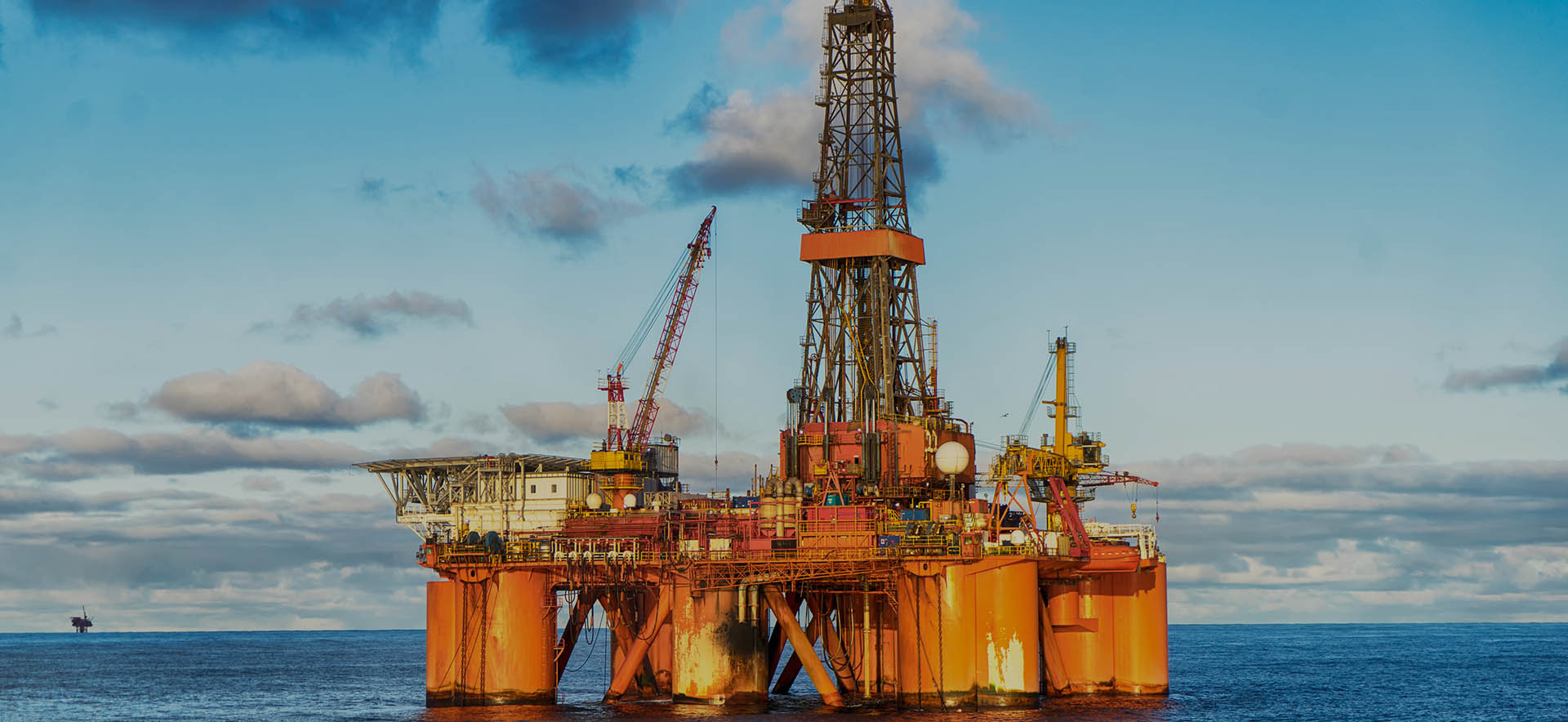
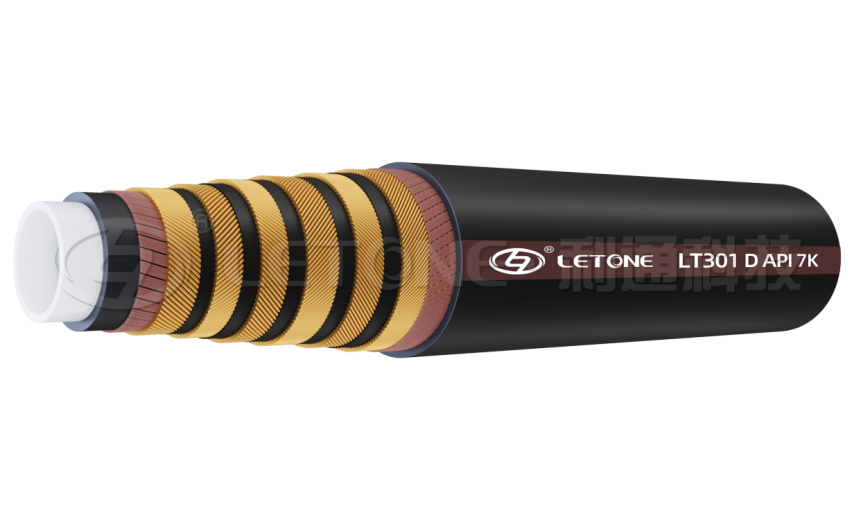
    Oil drilling and exploration operations often require withstanding significant pressure. Our oil drilling hoses can operate normally in environments with pressures up to 200 MPa, and can transport water-based and oil-based drilling mud under high pressure. Higher pressure necessitates more layers of steel wire, placing stricter demands on the manufacturing process. Our designers utilize 2-6 layers of high-strength, ultra-flexible steel wire or rope to withstand high pressure.

  • Equal Diameter

    When a regular rubber hose is fitted with a connector, the inner diameter of the hose at the connector is compressed significantly. Our oil drilling hoses, however, feature a constant diameter, which reduces the generation of eddies when the medium flows through the connector, decreases resistance, protects the rubber hose, avoids friction on the inner layer, and extends its service life.

  • Lightweight

    API 7K Series - Rotary Drilling and Vibration Damping Hose - features lightweight construction, making API series products 25% lighter than other common spiral wound hoses. Lighter hoses contribute to improved fuel economy, lower transportation costs, and easier handling and installation.
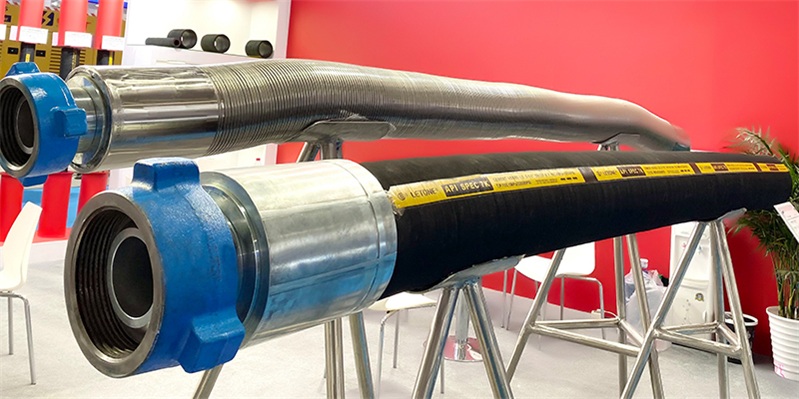
Application Products

  • Solid as a rock | LT301C API 7K High-Pressure Cement Hose
    Solid as a rock | LT301C API 7K High-Pressure Cement Hose

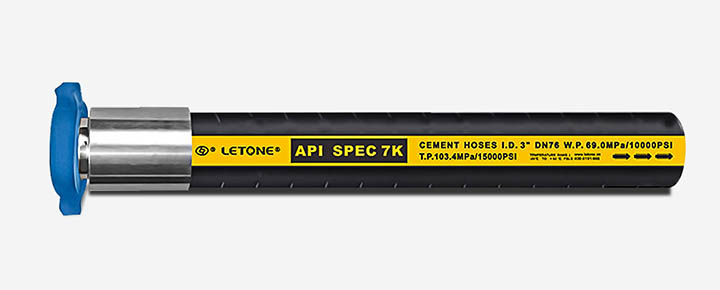
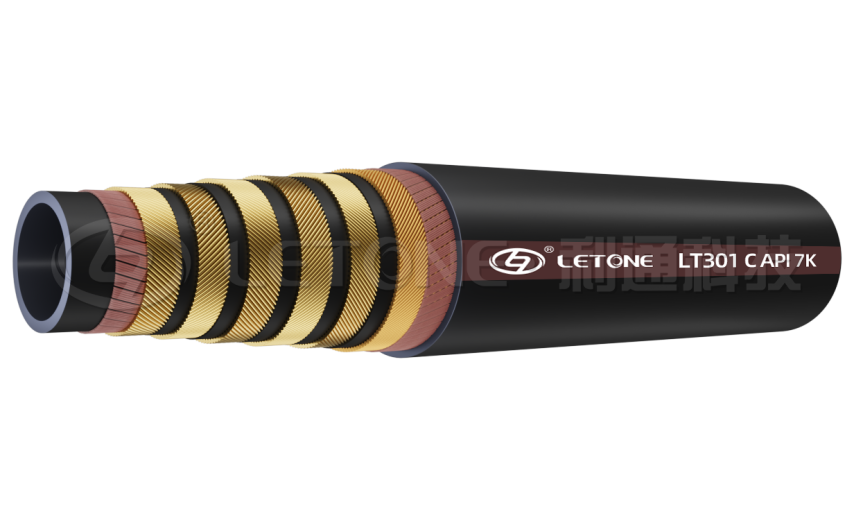
    Cementing is a key component of drilling engineering, laying the foundation for establishing oil and gas channels and implementing oil production projects. High-pressure cement hoses, as an important part of the cementing manifold, are crucial for improving the quality of cementing operations. Depending on the specific construction requirements, the LT301C high-pressure cement hose offers three customized options for its inner layer material: wear-resistant NR&SBR synthetic rubber, heat-resistant, oil-resistant, and hydrogen sulfide (H2S)-resistant HNBR special synthetic rubber, and ultra-wear-resistant and corrosion-resistant UPE. To improve cement slurry displacement efficiency and ensure the cementing truck can efficiently complete cementing tasks under high pressure, the hose uses 4-6 layers of wound ultra-strong, highly flexible steel wire or rope as a reinforcement layer, possessing high-pressure resistance and tensile strength, effectively improving construction efficiency and ensuring operational safety. Its outer rubber layer, made of wear-resistant and weather-resistant synthetic rubber, has flame-retardant and ozone-resistant properties, significantly extending the hose's service life and service period (an ultra-wear-resistant UPE outer coating can be customized).
  • Marine and Land Use | LT302 API 16C Choke and Kill Hose
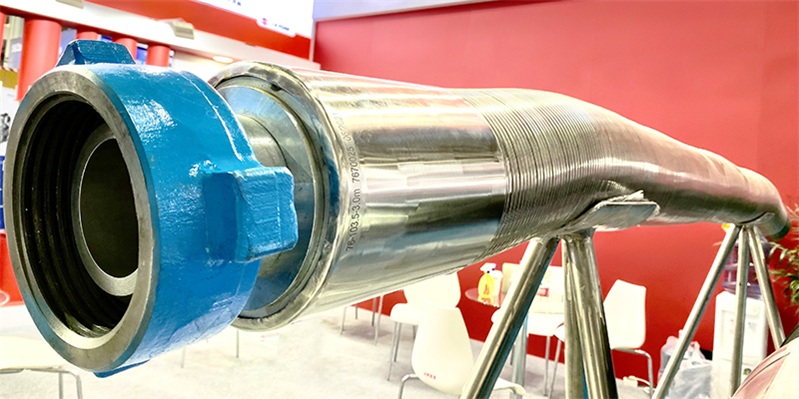
    Marine and Land Use | LT302 API 16C Choke and Kill Hose

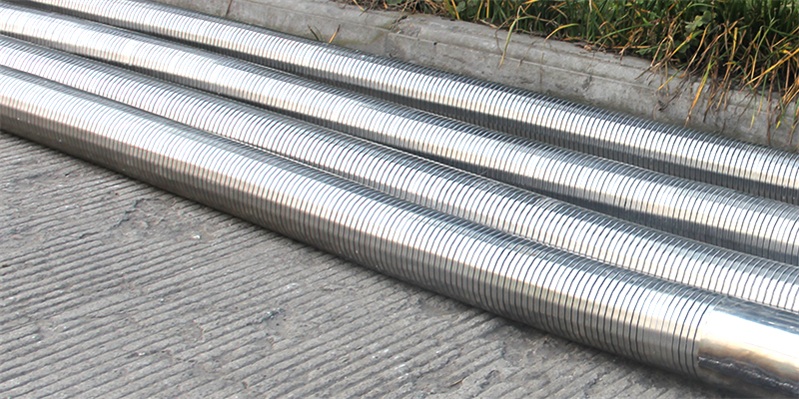
    Currently, increasing oil and gas exploration and development is not only a necessity for enterprise development, but also a long-term strategy for national energy security. Letone's choke and kill hoses have successively obtained API product certification (16C-0403), ABS product design evaluation certification (design approval), manufacturing evaluation certification (factory license), and type approval, meaning that the product is suitable for both onshore and offshore oil production projects. The outer rubber layer of the hose is made of high-temperature resistant and fire-resistant synthetic rubber, and a flame-retardant and high-temperature resistant stainless steel armor serves as the outer protective layer, further improving its fire resistance, high-pressure resistance, and wear resistance, ensuring the safety of the project and personnel.
  • Ensuring operational safety | LT303 API 16D BOP Well Control Hoses
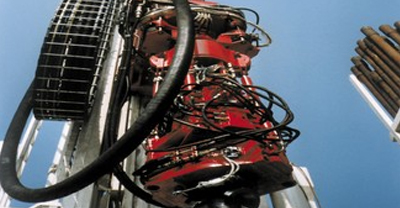
    Ensuring operational safety | LT303 API 16D BOP Well Control Hoses

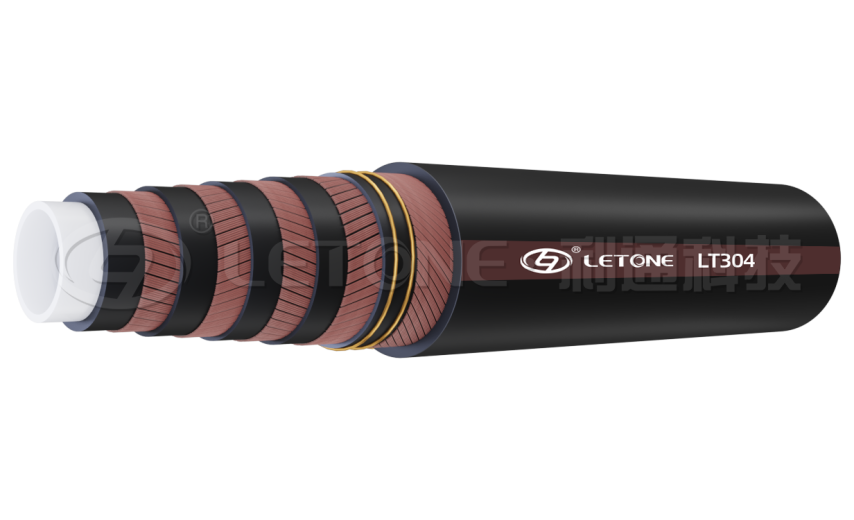
    Well control hoses are used in well control systems to remotely control the opening and closing of blowout preventers (BOPs) and deliver hydraulic oil under high pressure. Letone Technology's BOP well control hoses have passed API Q1 quality management system certification and Lloyd's Register fire resistance test, providing safety assurance for field operations. Based on the manufacturing process of four-layer wound high-pressure hydraulic hoses, Letone Technology's BOP well control hoses use fire-resistant rubber as the outer rubber layer and are armored with stainless steel to achieve fire resistance. Under extreme conditions of pressurization and open flame combustion at 704℃, the fire resistance time of Letone Technology's BOP well control hoses far exceeds the API standard. In addition, according to the nominal diameter requirements of BOPs, Letone Technology's BOP well control hoses also feature constant diameter (full flow). Its effective diameter exceeds the industry standard by more than twice, resulting in a larger flow rate, which can effectively shorten the BOP opening and closing time and ensure the safety of personnel and the project.

Success Cases

  • Multi-layer high-strength steel wire reinforced rotary drilling hose
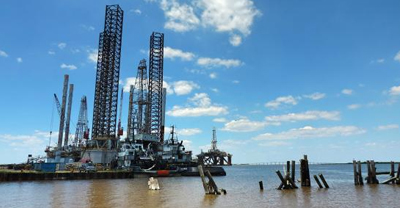
    Multi-layer high-strength steel wire reinforced rotary drilling hose

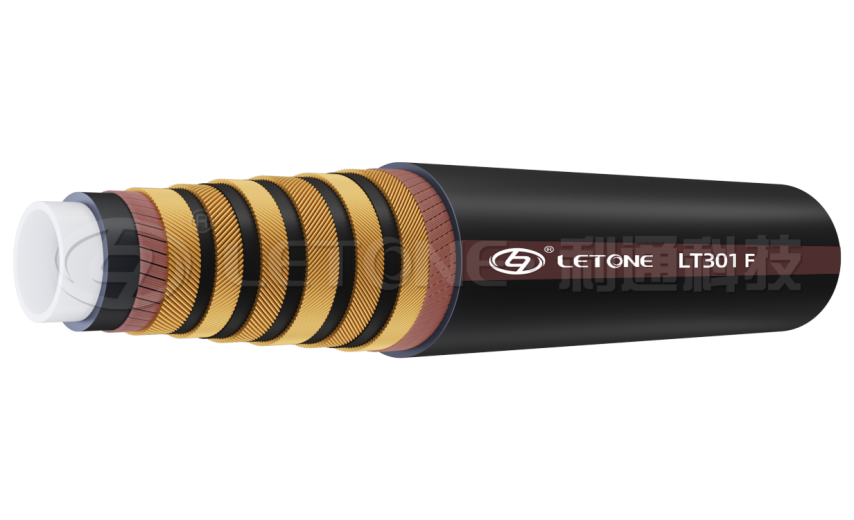
    Rotary drilling hoses are primarily used to transport water-based or oil-based drilling mud and other fluids at operating temperatures ranging from -30°C to +82°C. They are commonly used for water conveyance in oil fields, cement repair, geological exploration, and coal mining. It consists of three parts: the hose, the reinforcement, and the cap. The hose is made of abrasion-resistant, corrosion-resistant, and oil-resistant nitrile rubber. The reinforcement material is made of 2-8 layers of high-strength spiral steel wire, giving the hose a robust structure and resistance to high pressure. The cap is made of high-quality synthetic rubber (primarily neoprene), making the hose resistant to abrasion, corrosion, cuts, weather, ozone, aging, and sunlight exposure. As a result, the hose has a longer service life.
  • Provide oilfield rubber hoses and end fittings
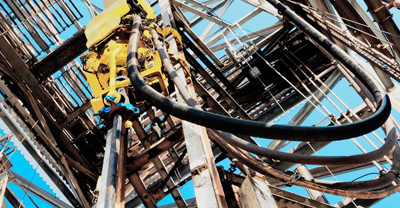
    Provide oilfield rubber hoses and end fittings

    Flexible drilling hoses play a vital role in oil extraction. They must withstand high operating pressures, extreme operating temperatures, abrasion, and other adverse elements. Steel cable reinforcements can withstand maximum operating pressures up to 15,000 psi. The steel wire is typically galvanized or copper-plated to improve its resistance to rust and corrosion. Due to the thickness of the reinforcement, hoses should be handled or stored properly to avoid being kicked or crushed. Doing so will significantly reduce their rated operating pressure.
  • Rotary vibrator hose E-grade acid service
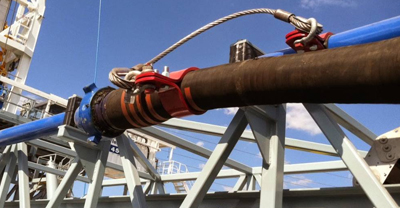
    Rotary vibrator hose E-grade acid service

    A flexible connection between the riser and rotary pipe (rotary drilling) or between the pump and the riser (rotary vibrator) is used for pumping drilling mud under ultra-high pressure in oil drilling and exploration operations. It meets the high requirements of directional drilling and downlink connections subjected to negative pressure impulses and high temperatures. This hose can also be used as a motion compensator hose to stabilize rotary drilling and pumping equipment and prevent vertical wave effects on offshore drilling platforms. The use of motion compensator hoses for phosphate oils is not recommended.
  • Advanced rotary drilling hoses, economical and affordable

    Advanced rotary drilling hoses, economical and affordable

    Letone Hydraulic Technology Co., Ltd., located in Henan Province, China, has developed into a strong competitor in the production of rotary drilling hoses for oilfield drilling rig systems. Thanks to over 20 years of hard work, our rotary/drilling hoses are widely accepted by distributors and contractors worldwide, including in the United States, Mexico, Brazil, South Africa, and other countries and regions.

Frequently Asked Questions

Causes of oil pipeline leaks

Oil pipeline leaks can disrupt normal oil transportation, and major leaks can cause significant inconvenience to people's production and daily lives. The main causes of oil pipeline leaks include human factors (many leaks are caused by poor design, and such inherent design flaws are a major cause of oil pipeline leaks; improper pipeline installation according to strict specifications can also lead to leaks); and material failure (the deterioration of pipeline materials is the most direct and primary cause of oil pipeline leaks).

Main measures for preventing oil pipeline leaks

Thorough preparation before pipeline installation: During the preparation phase, construction personnel should have a comprehensive understanding of the pipeline construction process, operational nature, and environment. Extensive research and investigation are crucial to ensure the safe investment and operation of the pipeline project and minimize leaks after completion. Adherence to relevant pipeline installation requirements: Oil pipelines have a specific installation sequence. Installation should adhere to the principles of underground before aboveground, large pipes before small pipes, and high-pressure pipes before low-pressure pipes. Only by strictly following these principles and operating procedures can the quality of pipeline installation be guaranteed.

Methods and measures to improve corrosion problems in oil pipelines

To improve corrosion prevention in oil equipment, the first step should be to conduct regular inspections and maintenance. This includes checking the current condition of oil pipelines and taking immediate repair measures if corrosion is observed. For example, inspecting the anti-corrosion coating for cracks and inspecting damaged parts to ensure the equipment's integrity. Simultaneously, optimizing corrosion prevention measures for long-distance pipelines involves selecting corrosion-resistant metal materials and increasing pipeline strength to meet the requirements of long-distance transportation.

Get a quote

Please fill out the form below, and we will contact you within 24 hours.
*
*

We are available 7*24!

We will contact you within half an hour of receiving your inquiry call.
  • Hotline

    +86-0371-55157686

  • Fax

    0395-2610007


Customer Service

+86-0371-55157686

Tel

wechat

WeChat

douyin

Tik Tok

TOP

Inquiry Information

       
*        
*        
       

File download

Simply fill out the form below to download the file!
*
*