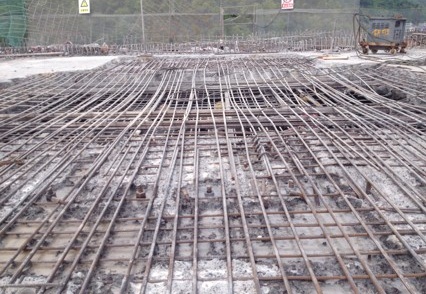
High-pressure water jet technology, also known as hydraulic demolition and removal technology, refers to the general term for techniques that use high-pressure water jets to remove deteriorated concrete, roughen concrete surfaces, and clean adhering substances. This technology has the advantages of not generating severe vibration, not causing stress diffusion, not damaging the reinforcing steel structure, being able to break up layers to any depth, being environmentally friendly, and energy-saving. It is particularly suitable for the maintenance, reinforcement, and renovation of bridges, dams, tunnels, docks, airports, and important buildings.
Business Scope: Luohe Letone Hydraulic Technology Co., Ltd. is a high-tech enterprise specializing in high-pressure water jet equipment, technology, and engineering applications. Our company primarily engages in subcontracting and equipment sales services for concrete hydraulic breaking, demolition, roughening, cleaning, cutting, slurry removal, diamond cutting, and rapid bridge renovation. Our demolition services feature: vibration-free operation, structural protection, precise control of the work area, direct paving after operation, unrestricted work space, no damage to reinforcing steel, dust-free operation, low noise, environmental friendliness, and compliance with rapid construction requirements.
Business Advantages: We possess an experienced water jet construction team, having accumulated expertise in the construction techniques for horizontal, side, and bottom surfaces of reinforced concrete structures. Our company also maintains strategic partnerships with well-known international companies in the industry regarding equipment, technology, and R&D, bringing the most advanced international hydraulic breaking technologies and experience to our clients. Our application experience and understanding in the field of ultra-high-pressure water jetting are exceptional.
Product Introduction
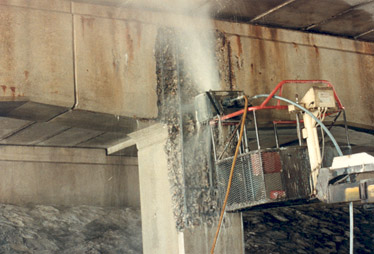
Hydraulic demolition of T-beam concrete of viaduct
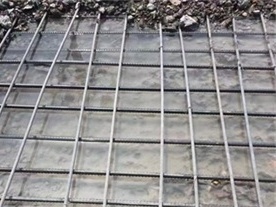
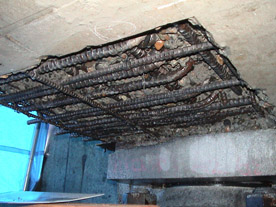
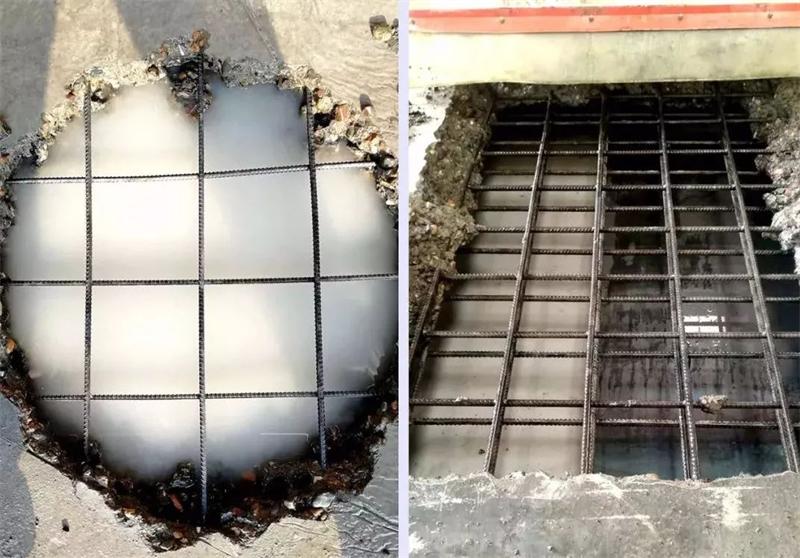
High-pressure water pumps generate high-pressure water jets of 100-280 MPa, which are injected into the surface of concrete. Concrete has a non-homogeneous, multi-porous structure, while reinforcing steel has a dense structure. The water jetted from the high-pressure pump penetrates the concrete, creating tension exceeding the concrete's tensile strength, causing it to break apart. However, reinforcing steel (including the wires attached to it) is a homogeneous, dense material with no gaps, preventing water from entering the steel or wires. Therefore, the high-pressure water jet does not damage the reinforcing steel or other structural components.
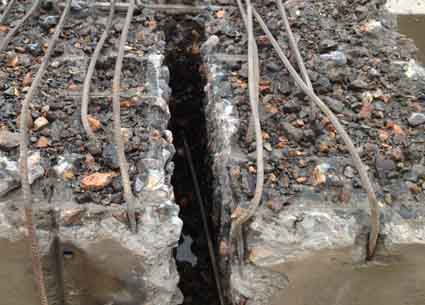
Hydraulic removal of concrete at joints
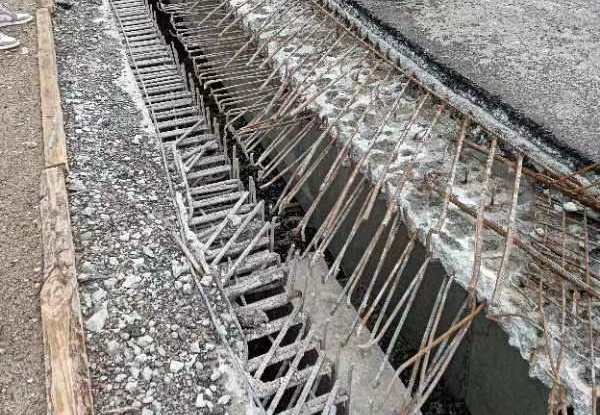
In concrete structures, it is common to encounter gaps such as joints and expansion joints that require concrete removal. These gaps are not only narrow but also deep. Using traditional equipment such as pneumatic drills and ropes is not only difficult but also prone to damaging other parts. However, hydraulic demolition technology can effectively solve this problem. Hydraulic demolition robots use extended rods and appropriate nozzles to enter the gaps, and can cut to a depth of up to 1.5 meters.
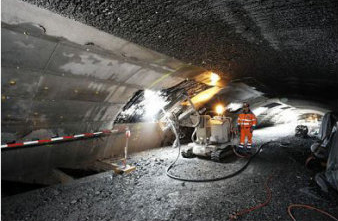
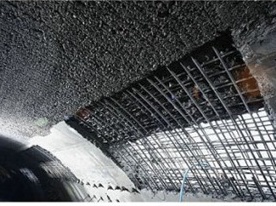
Hydraulic demolition of substandard concrete at the top of the tunnel
This problem can be easily solved using high-pressure water jet technology. The principle of hydraulic demolition is to generate high-pressure water using a high-pressure pump driven by a high-powered diesel engine or electric motor. This supersonic high-pressure water is then ejected from special nozzles and injected into the loose, fractured surface of the damaged concrete. The high-pressure water creates overpressure within the concrete; when this pressure exceeds the tensile strength of the concrete, it causes the concrete to break, while the reinforcing steel structure and surrounding components remain undamaged.
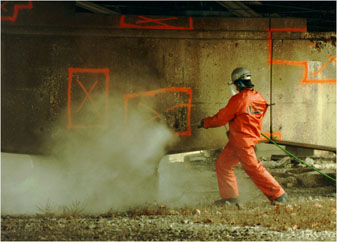
Handheld water gun to remove localized substandard concrete
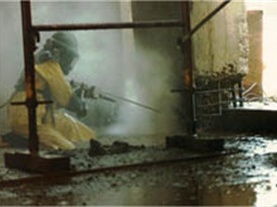
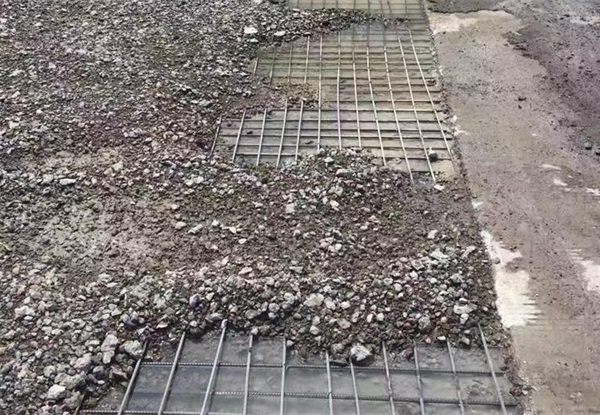
For reinforced concrete structures such as bridge piers, dams, and highways, when localized areas of concrete deterioration necessitate removal and re-pouring of new concrete, traditional mechanical removal methods are slow, noisy, dusty, and can damage the reinforcing steel structure, hindering the renovation process. Using a handheld water gun for hydraulic concrete breaking is the ideal method.
Hydraulic Crushing Process
Vibration-free, protective structure
Precise control of the work area
Can be laid directly after the work is completed.
Unrestricted workspace
The reinforcing bars are not damaged.
Traditional Mechanical Crushing
Mechanical vibration generates microcracks
Depth and range are completely uncontrollable
After being broken, it needs to be further leveled.
The work is greatly limited by space.
The reinforcing steel bar is bent and damaged, and needs to be replaced.
Frequently Asked Questions
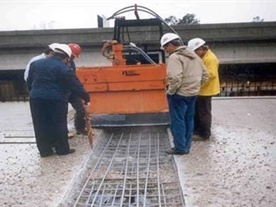
Hydraulic demolition of concrete for elevated road bridge reconstruction and expansion
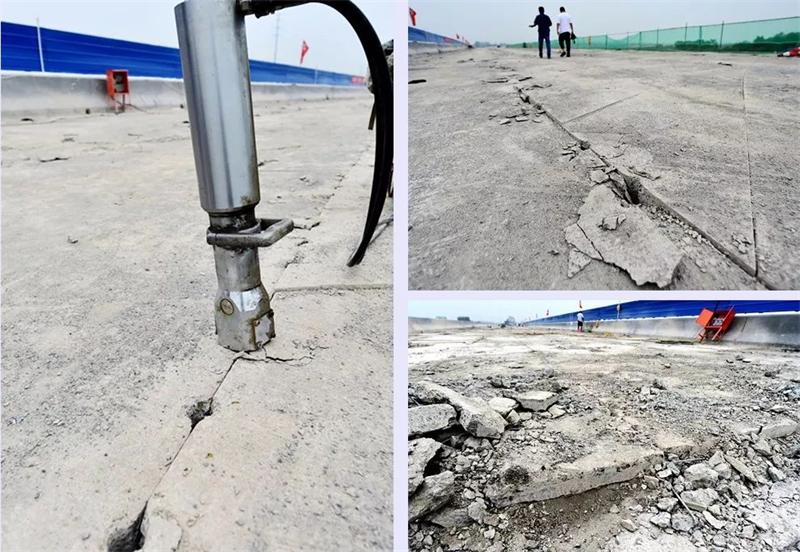
Traditional bridge widening and rebar installation involves using an air compressor to break up the asphalt concrete, followed by cutting with a diamond cutter along pre-marked lines on the flanges. However, this method causes tiny cracks in the reinforcing steel structure due to the vibration of the air compressor, creating potential safety hazards. In other countries, high-pressure water jet concrete breaking is already a well-established technology, while in my country it is still in its early stages. This method of using high-pressure water jets for concrete breaking offers advantages such as high efficiency, dust-free operation, precise working range, preservation of the reinforcing steel structure, and environmental friendliness.
Large-area hydraulic fracturing of high-speed railway bridge deck pavement
This problem can be easily solved using high-pressure water jet technology. The principle of hydraulic demolition is to generate high-pressure water using a high-pressure pump driven by a high-powered diesel engine or electric motor. This supersonic high-pressure water is then ejected from special nozzles and injected into the loose, fractured surface of the damaged concrete. The high-pressure water creates overpressure within the concrete; when this pressure exceeds the tensile strength of the concrete, it causes the concrete to break, while the reinforcing steel structure and surrounding components remain undamaged.
Hydraulic demolition and removal technology
Working Principle: High-pressure water fracturing works by pressurizing water to a high pressure and then spraying it through special nozzles onto the surface or interior of concrete. The speed and pressure of the high-pressure water stream generate tremendous impact and cutting force, causing the concrete to fracture and break. Applicable Scenarios: High-pressure water fracturing is suitable for the demolition of various concrete structures, including walls, floors, and pavements. Compared to other fracturing methods, high-pressure water fracturing produces no noise or vibration, and has less impact on the surrounding environment and structure. Therefore, it is particularly suitable for locations where quiet environments or environmental protection are required.
Related products
Get a quote
Please fill out the form below, and we will contact you within 24 hours.
We are available 7*24!
We will contact you within half an hour of receiving your inquiry call.