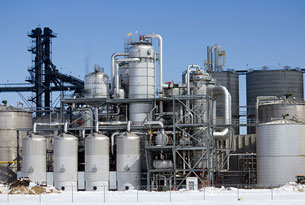
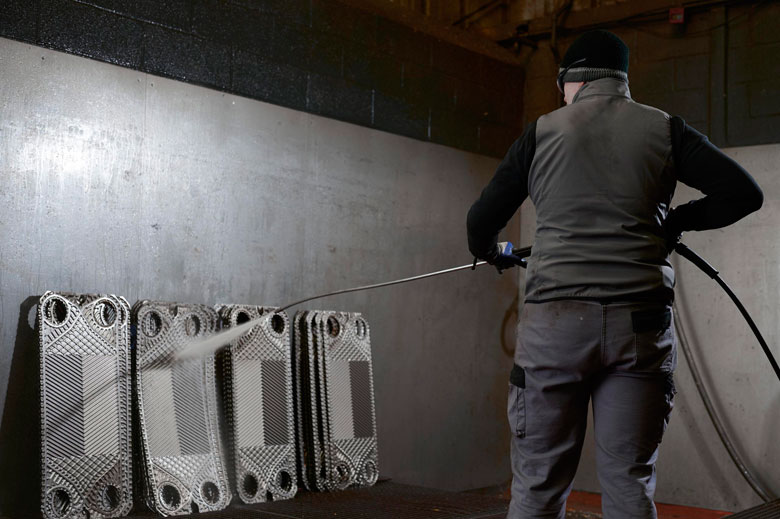
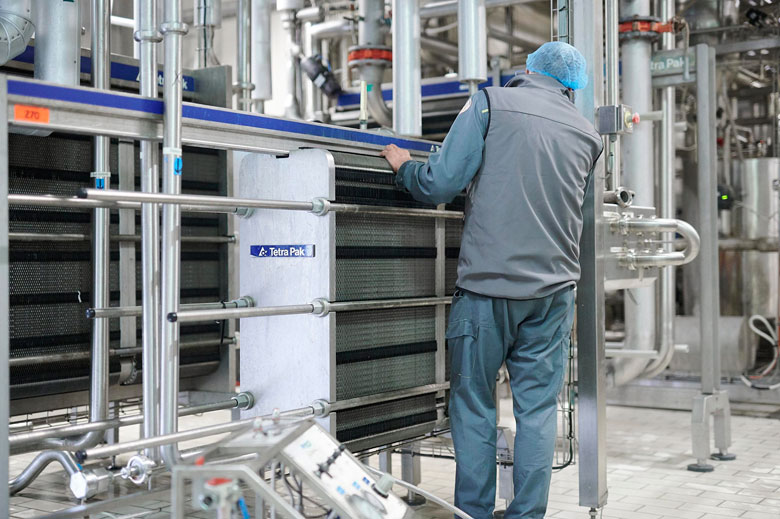
Applications: Plate heat exchangers are available in any application where heat exchange is required.
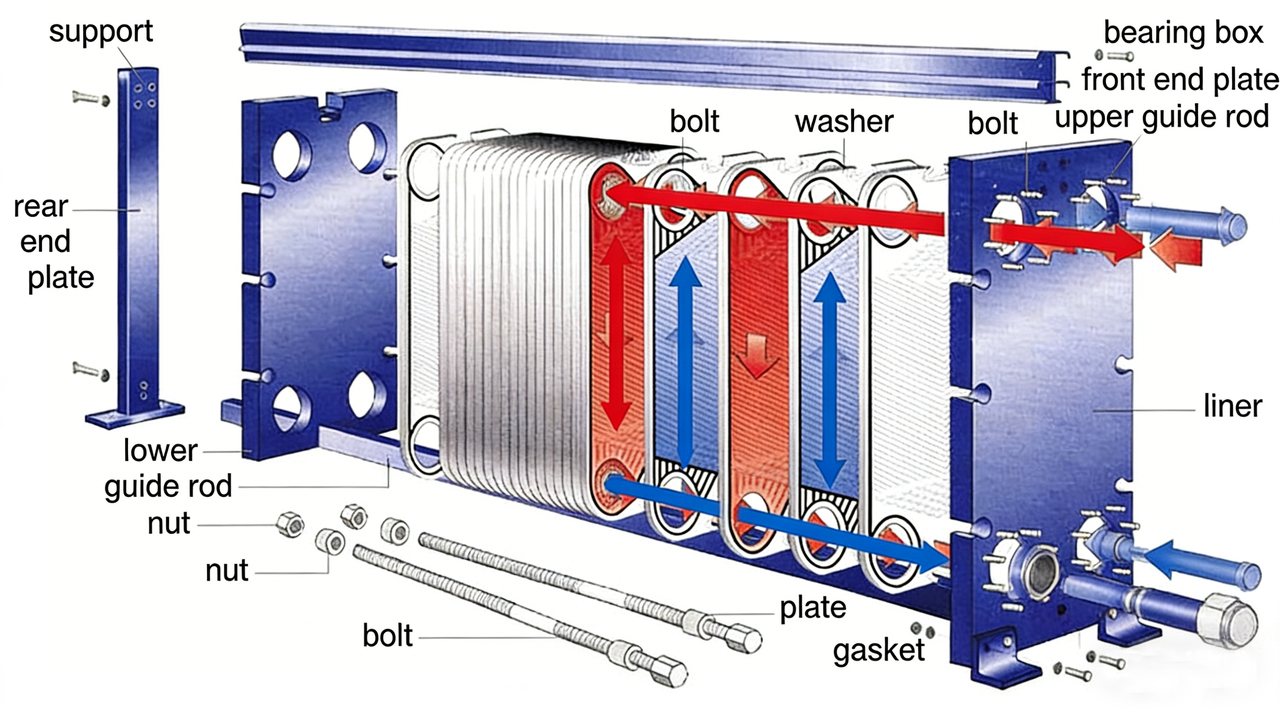
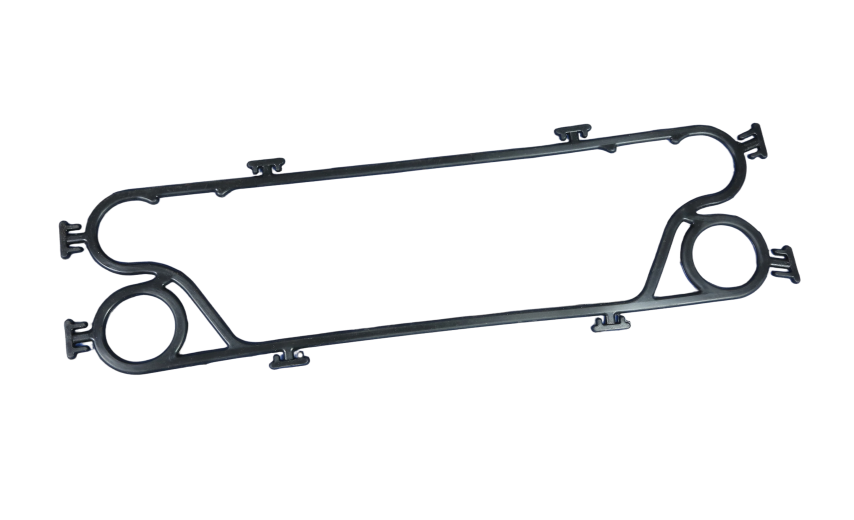
Plate heat exchanger and gasket introduction:A liquid flow channel is formed between the two types of plates, through which refrigerant and heat transfer occurs, respectively. Each plate is fitted with a sealing gasket, which seals the flow and isolates the hot and cold fluids from flowing into adjacent channels. The corrugations on the plates create turbulence and support the plates against pressure differences. Both types of plates and gaskets are identical; the difference lies in the way the gaskets are installed, which effectively isolates the hot and cold fluids.
Application Scope:Plate heat exchangers have market applications wherever heat exchange is required.
Plate heat exchanger brands:We offer over 500 types of gaskets from various well-known heat exchanger brands, including Alfa Laval, APV, GEA, Tranter, and Hisaka.
Rubber material of gasket:The solution is determined based on the heat exchanger design. If it is still uncertain, we can also determine the solution based on the characteristics of the medium and the operating temperature.
Gasket classification: adhesive and non-adhesive, single-sided flow and diagonal flow
Manufacturing Process Of Plate Heat Exchangers And Gaskets
Plate heat exchangers offer advantages such as high heat exchange efficiency, small footprint, simple manufacturing, and easy maintenance. They are suitable for applications in HVAC fields, including district heating, domestic hot water, ice storage, and swimming pool temperature control; in the petrochemical industry, they are used for cooling acid, alkali, and salt solutions, and for process medium heating/cooling systems. They are also found in power, steel, metallurgy, food, papermaking, shipbuilding, pharmaceutical, textile, and automotive industries—wherever heat exchange is required, there is a market for plate heat exchangers. As part of our plate heat exchanger gasket manufacturing process, our team adheres to precise and rigorous procedures at every stage.
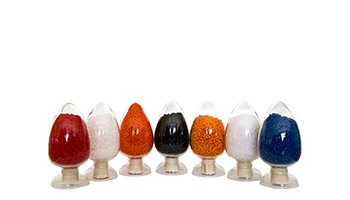
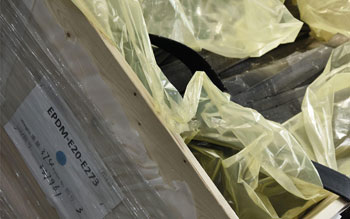
Raw material supply
All our components and elastomers are manufactured in-house to ensure the highest quality products.
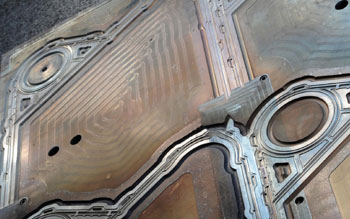
Tool manufacturing
They manufacture their own molds on-site, offering flexibility and responsiveness.
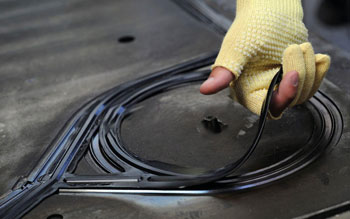
Gasket manufacturing (forming)
After the first extrusion step, the rubber is vulcanized in a press (17 in total, which can accommodate models from the smallest to the largest).
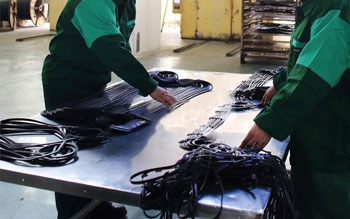
Quality control
All seals were manually removed and visually inspected before being analyzed in the laboratory to check for compliance with standards.